OpenSplice DDS
The longstanding benchmark in OMG Data-Centric middleware, trusted to power the world's most demanding distributed, real-time, secure, and fault-tolerant systems.
OpenSplice DDS is ZettaScale's DDS implementation for industry-proven OMG Data-Centric middleware platform, trusted worldwide to power distributed, real-time, fault-tolerant, secure, and mission-critical systems. Engineered for deterministic performance and operational resilience, it enables seamless, scalable, and secure data distribution across the most demanding aerospace, defense, industrial, transportation, and critical infrastructure environments.
ZettaScale OpenSplice DDS overview
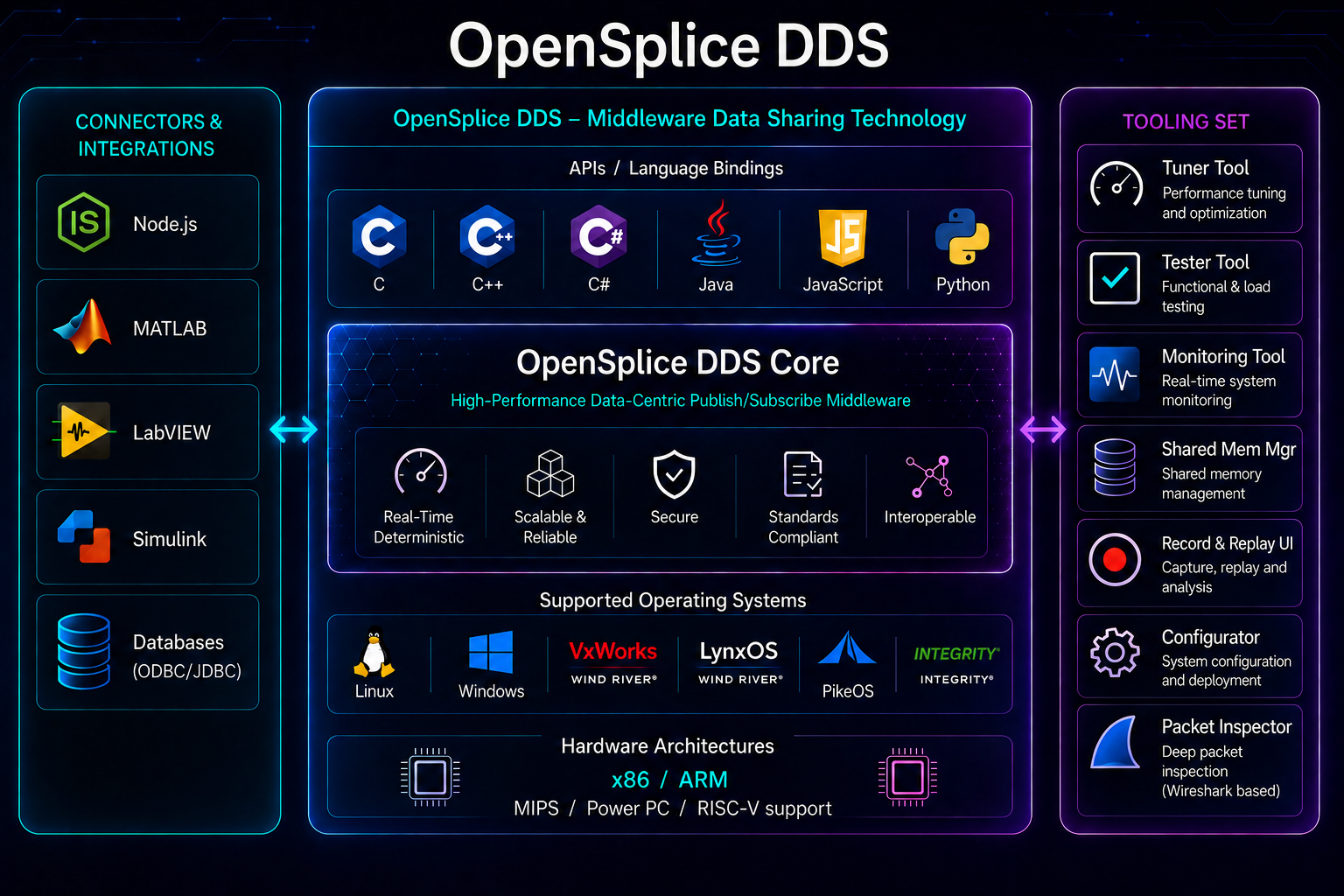
ZettaScale OpenSplice DDS enables data to be shared and integrated across a wide spectrum of operating systems and platforms. It provides a full implementation of both the OMG DDS latest rev1.4 (DCPS profiles) and the OMG-DDSI / RTPS v2.4 interoperable wire-protocol standards. It is targeted for use with server-class (desktops, racks etc.) platforms as well as more specialized real-time embedded environments and operating systems (e.g. single board computer running VxWorks). OpenSplice DDS is fully interoperable with Cyclone DDS, Zetta DDS and any OMG compliant implementation.
Data Centricity
OpenSplice DDS sets itself apart from other types of messaging or data sharing technology through advanced features and non-functional properties:
- Data Centric – enabling applications to be designed around an extensible and evolvable data model, promoting end-to-end type safety and time and space efficiency.
- Real-time – delivering the right information to the right place at the right time, all the time.
- Dependable – ensuring availability, reliability, safety and integrity in spite of hardware and software failures.
- Secure – maintaining confidentiality, integrity and authenticity of exchanged data.
- Fault-tolerance – OpenSplice DDS is itself a fault-tolerant middleware and helps build fault-tolerant systems that can self-heal.

Wide Tooling and OS Support
A rich set of OpenSplice DDS tools is provided including:
- the Tuner,
- the Tester,
- the Configurator,
- the Record & Replay Manager,
- the Launcher,
- the shared memory monitor.
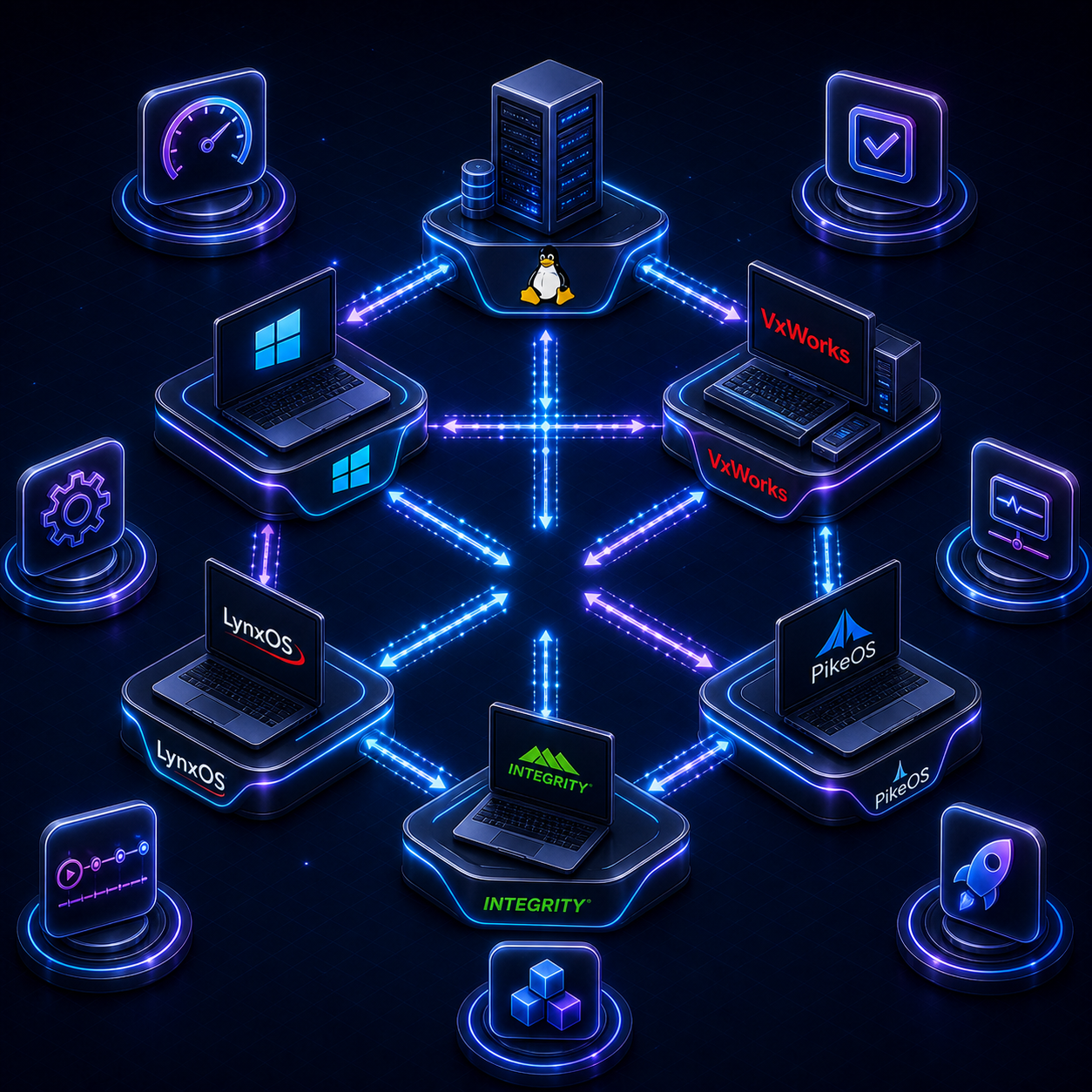
Wide range of Enterprise and Embedded platform support including:
- Linux
- Windows
- VxWorks
- PikeOS, and many others on-demand.
OpenSplice DDS Connectors
Extra Connectivity, enabling data to be shared and integrated across a wide spectrum of technologies, including:

Unique Architectural Patterns for Scalability and Low-Jitter
Scalable Durability Service supports disconnections and automatic alignment policies to guarantee the eventually consistent model of all non-volatile data sets within the DDS domain.
Better performance, determinism and scalability, through unique architectural patterns such as:
- the network scheduling, to orchestrate data distribution based on their importance and the allowed time budget,
- the shared memory, to build an in-memory realtime database,
- the traffic shaping, to adapt the Transport packet frames to available bandwidth,
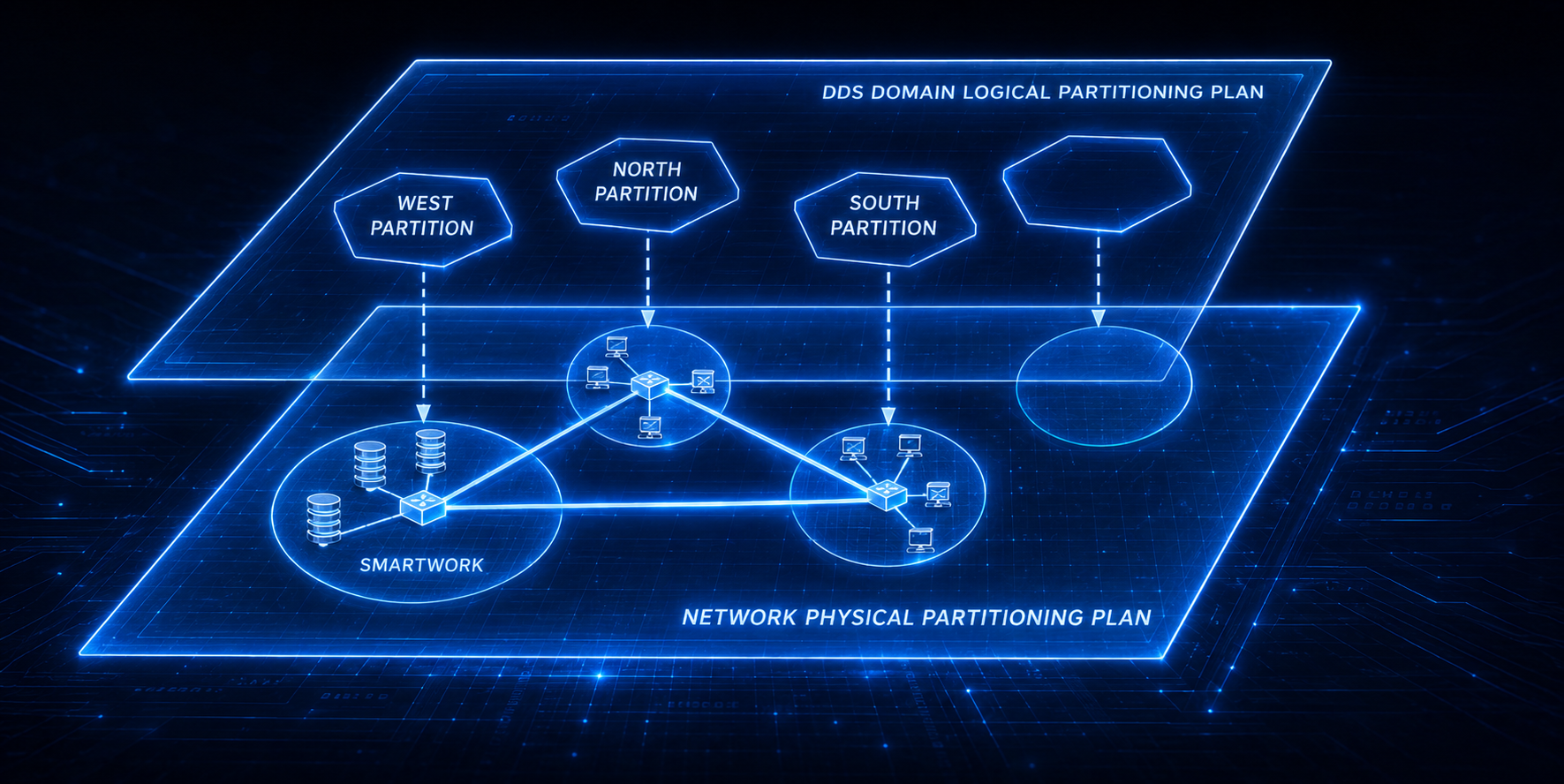
- logical and physical datasets partitioning, and
- the priority lanes patterns, to avoid data priority inversion potential problems.
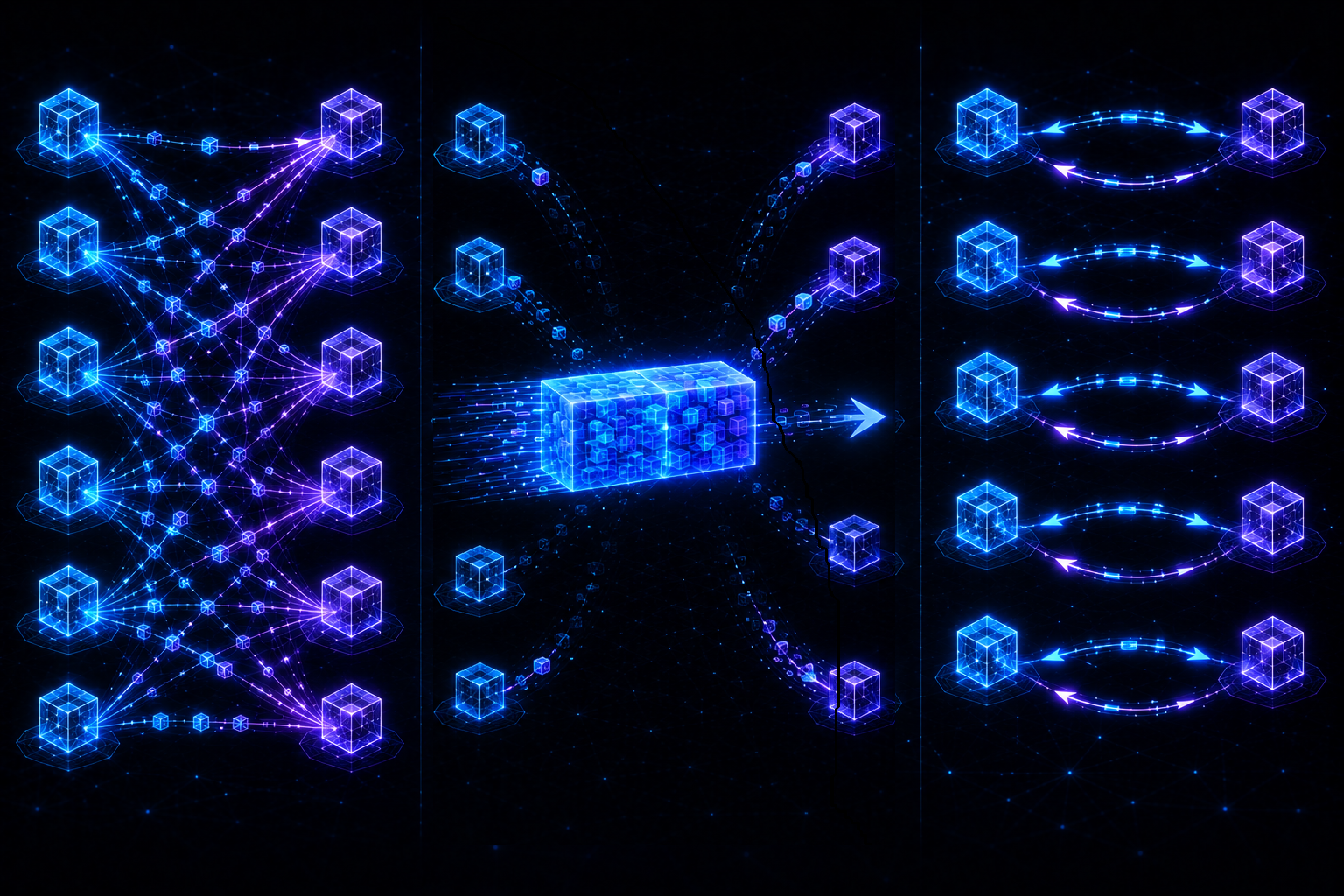
Extra Communication Paradigms
- RMI (request-reply Remote Method Invocation),
- Stream APIs, for batched data samples management,
- N Pub – M Sub, one-to-one or many-to-many efficient communication.
Professional Service Offering
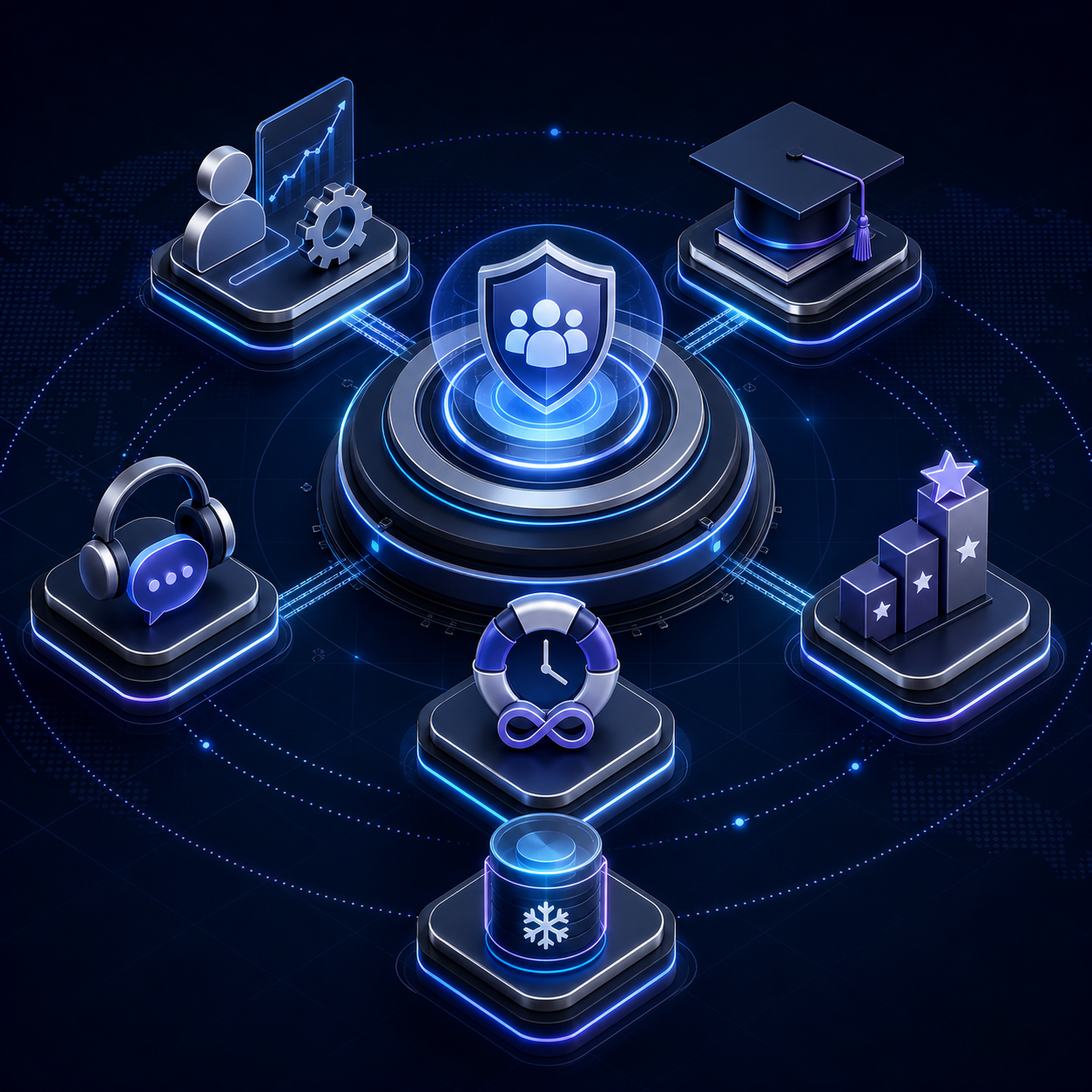
- On-site or remote consulting,
- On-site or remote training,
- Technical support with different levels of committed Service Level Agreements,
- Frozen support of your preferred OpenSplice DDS OS/HW version,
- Long Term Support commitment for many years.
Architecture Key Elements
In wide distributed systems the Network and the CPUs are considered the most critical resources. As such, they are deemed the main bottleneck of the overall system performance.
In real-time systems, CPU orchestration and scheduling are controlled by the operating system scheduler, which has very limited ability to control the network, the computer network interface cards, or the network routers in use. This lack of network scheduling is problematic when data flows must be prioritized.
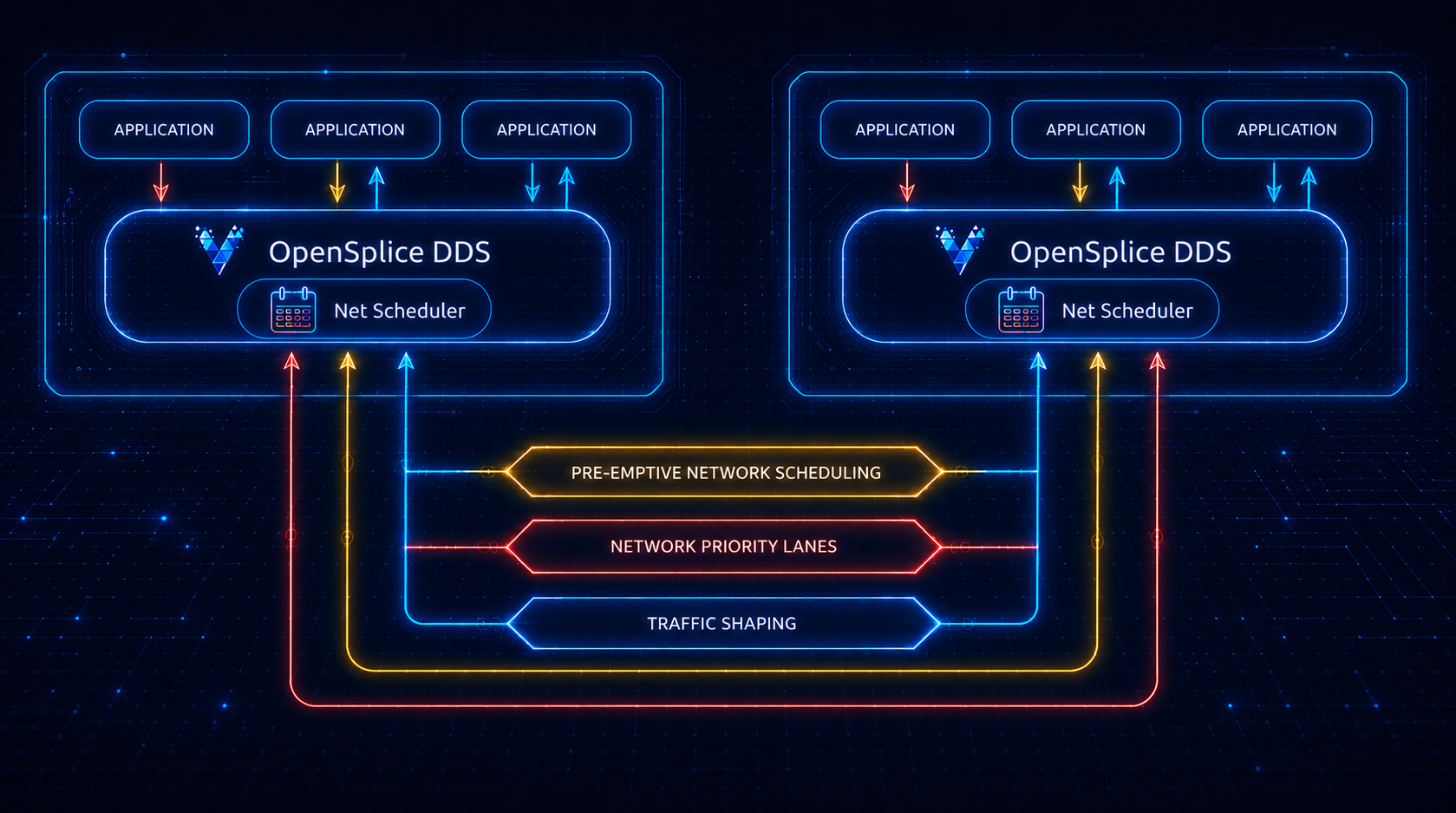
To take advantage of multicore computing architectures and to address network scheduling at the DDS level based on urgency and importance, OpenSplice DDS can federate all applications running on the same computing unit and orchestrate their data dissemination based on Quality of Service.
Associating QoS to data enables the DDS infrastructure to pre-empt low-priority traffic in favor of the highest-priority and most urgent traffic.
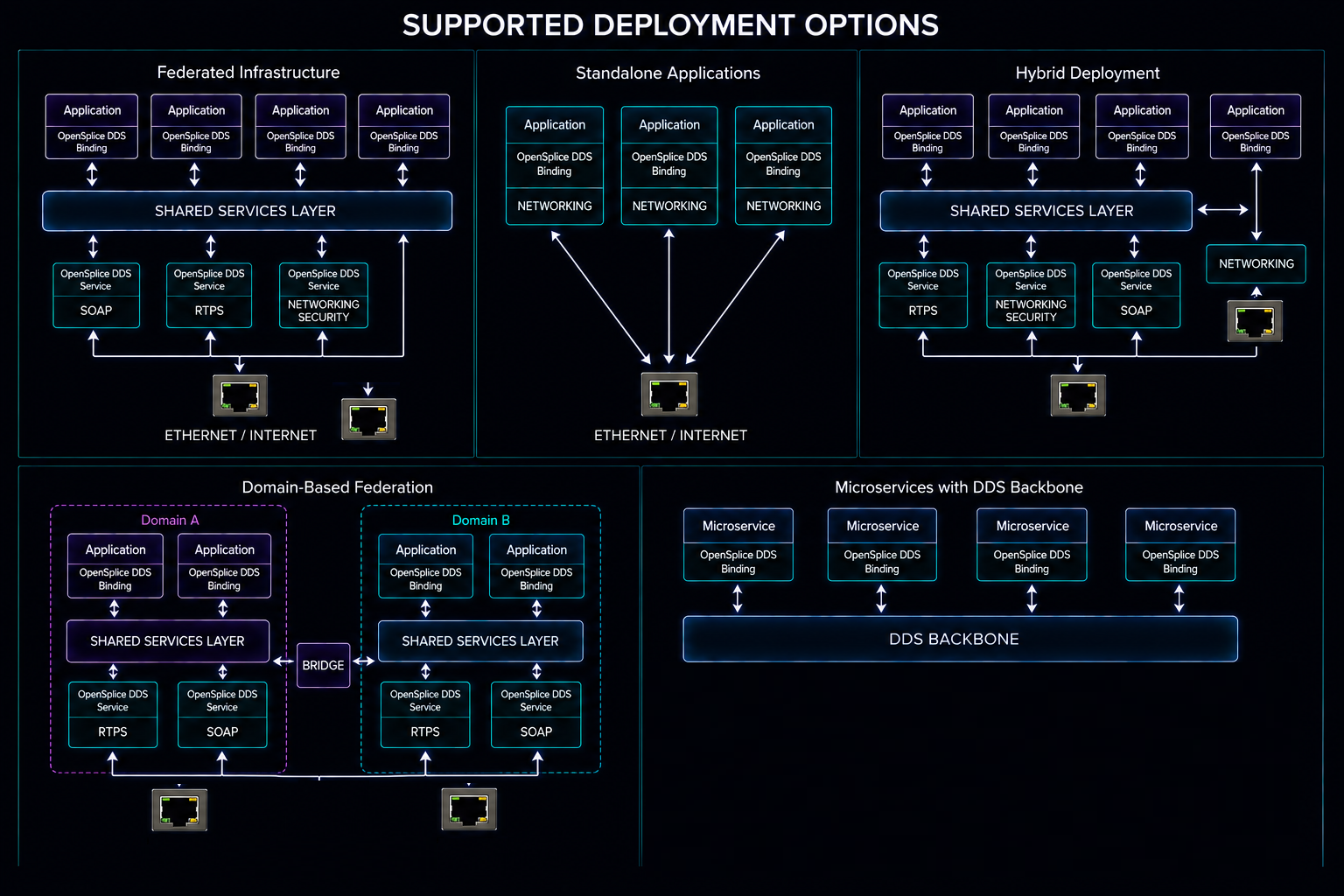
OpenSplice DDS can operate and be deployed in two fully interoperable modes:
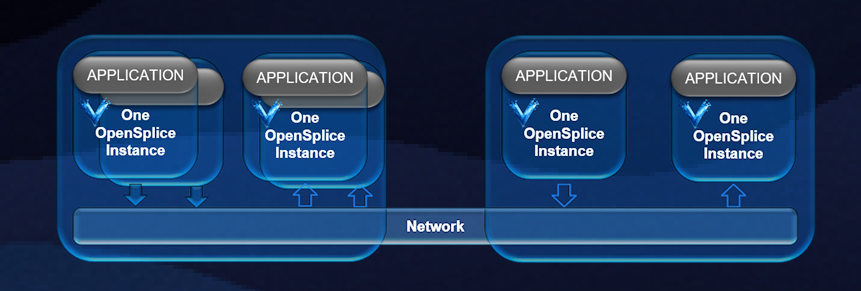
- Federated mode, for complex architectures where each computer hosts several DDS-aware applications.
- Standalone single-process mode, when only one application uses DDS and there is nothing to federate or orchestrate.
Federated and Standalone deployment modes can be mixed within the same system or even on the same machine.
Federated Architecture and Shared Memory
To rationalize memory resources when several DDS-aware applications run on the same node, OpenSplice DDS can use a shared memory segment common to local DDS applications.
This shared memory segment behaves like an in-memory real-time database and provides ultra-low latency inter-core communication while keeping data physically stored only once on a machine federation.
Simple Standalone/Single Process Architecture
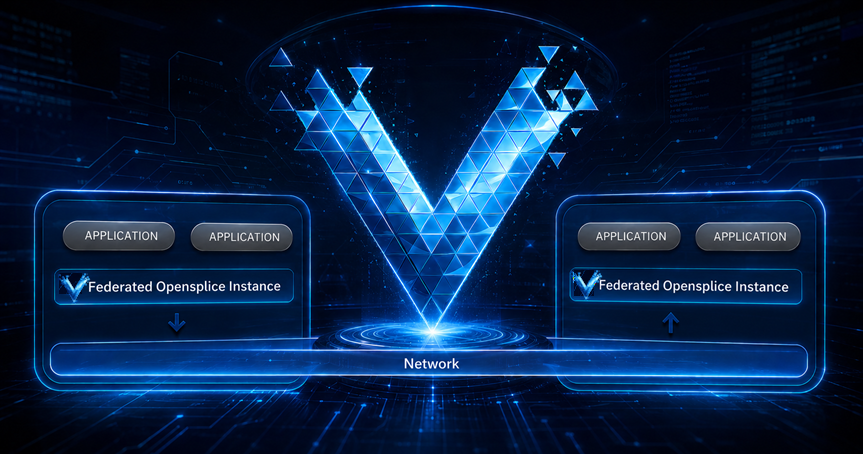
This deployment allows DDS applications and OpenSplice DDS middleware libraries to be linked together into a single process.
It is useful when one DDS-aware application runs on a computer and there is nothing to federate, making it particularly suitable for embedded platforms.
Network Scheduler and Priority Lanes
The OpenSplice DDS Network Scheduler can create network priority lanes for urgent and important data stream classes.
It helps pre-empt less urgent data streams and allocate network bandwidth to the highest-priority, most up-to-date and most urgent data streams as defined by their QoS.
Network Traffic Confinement
DDS global data spaces and producing applications can be organized in logical groups known as DDS partitions.
OpenSplice DDS Network Scheduler can associate different multicast and unicast addresses to the same DDS logical partition to physically confine traffic to the subnetwork where it is actually used.